Ever feel like every “financial guru” on your feed is trying to sell you a complicated, twelve-step masterclass just to manage your own paycheck? It’s honestly exhausting. They make it sound like you need a PhD in economics and a spreadsheet that looks like a NASA launch sequence just to set aside a little cushion. But here’s the truth: most of that high-level noise is just clutter. If you’re actually looking for how to automate your savings without losing your mind (or your sanity), you don’t need a complex algorithm; you just need a system that works while you’re busy living your life.
I’m not here to give you a lecture or sell you a subscription to some overpriced budgeting app. Instead, I’m going to share the exact, low-maintenance framework I used to transition from a stressed-out project manager to someone who actually breathes easy when checking their bank balance. We’re going to skip the fluff and focus on practical, “set-it-and-forget-it” tactics that turn saving into a background process, much like a slow cooker doing its thing while you focus on more important stuff. Let’s get your money moving without the manual labor.
Table of Contents
- Mastering the Art of Setting Up Recurring Bank Transfers
- The Direct Deposit Savings Split for Effortless Growth
- Five Pro-Tips to Level Up Your Automated Savings Game
- The Bottom Line: Making Your Money Move on Autopilot
- The Secret Sauce to Wealth
- The Finish Line is Just the Starting Line
- Frequently Asked Questions
Mastering the Art of Setting Up Recurring Bank Transfers

Think of setting up recurring transfers like prepping your ingredients before you actually start cooking. If you wait until you’re hungry to chop the onions, you’ve already lost the battle. The same goes for your money. Instead of trying to manually move cash every payday—which is basically asking your willpower to do the heavy lifting—you should lean on setting up recurring bank transfers to do the grunt work for you. By scheduling a specific amount to move from your checking to your savings the day after your paycheck hits, you’re essentially making your financial goals invisible to your daily impulses.
If you want to get even more surgical with it, I highly recommend looking into a direct deposit savings split. Most employers make this incredibly easy; you can tell them to send, say, 80% of your check to your main account and 20% straight into a high-yield savings account. It’s like adding a secret ingredient to a recipe that makes the whole dish better without you even noticing it’s there. You aren’t “missing” that money because you never actually saw it in your spending balance to begin with.
The Direct Deposit Savings Split for Effortless Growth
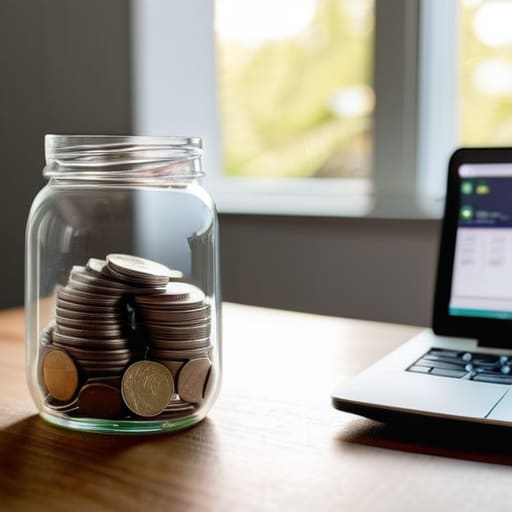
If you really want to take the “human error” out of your finances, you need to go straight to the source: your paycheck. Think of a direct deposit savings split like adding a little extra seasoning to a recipe before it even hits the pan; by the time you actually see your money, the “flavor” of your savings is already locked in. Instead of waiting until the end of the month to see what’s left over—which, let’s be honest, is usually just a handful of loose change and some regret—you can instruct your employer to send a specific dollar amount or percentage directly into a separate savings account.
This is one of those automated wealth building strategies that feels like a cheat code. Because that money never even touches your checking account, you don’t feel the “sting” of losing it. It’s not a sacrifice; it’s just a silent, invisible shift in your cash flow. I’ve found that even splitting off just $50 per paycheck can be a massive win for building an emergency fund automatically without you having to lift a single finger once the initial setup is done.
Five Pro-Tips to Level Up Your Automated Savings Game
- Use “Round-Up” Apps to Catch the Loose Change: Think of this like those tiny bits of dough left over after making cookies—you might not notice them individually, but they add up fast. Many banks and apps now offer a feature that rounds up every purchase to the nearest dollar and tosses that extra change into your savings. It’s practically invisible, but your balance will definitely feel the love.
- Sync Your Savings with Your “Subscription Cycle”: We all have those monthly recurring bills, right? Try setting your savings transfers to trigger a day after your biggest monthly paycheck hits or right after your main utility bills clear. It’s all about timing the ingredients so you don’t accidentally cook with an empty pantry.
- Create “Goal-Specific” Buckets: Instead of one giant, intimidating “Savings” pile, split it up into digital buckets like “New Laptop,” “Emergency Fund,” or “Summer Road Trip.” It’s way easier to stay motivated when you can see exactly which dream you’re funding with every automated transfer.
- The “Incremental Bump” Strategy: Every six months, or whenever you get a modest raise at work, bump your automated transfer up by just $25 or $50. It’s like slowly increasing the heat on a stove; if you do it gradually, you won’t burn your lifestyle, but you’ll definitely reach a boil much faster.
- Automate Your “Windfall” Rule: This one takes a little manual setup, but it’s a game changer. Make a pact with yourself that whenever you get “unexpected” money—like a tax refund or a birthday check from Grandma—a set percentage (say, 50%) goes straight into savings before you even have a chance to think about spending it.
The Bottom Line: Making Your Money Move on Autopilot
Stop relying on willpower to save; treat your automated transfers like a non-negotiable monthly bill that you pay to your future self.
Use the “split” method with your direct deposit to move money before you even have a chance to see it in your checking account—it’s like seasoning a dish before it hits the pan, it just works better that way.
Start small if you have to, because even a tiny, automated trickle of cash builds momentum and keeps you from having to make those stressful “should I save or spend?” decisions every single week.
The Secret Sauce to Wealth
“Think of automating your savings like pre-prepping your ingredients before you start cooking; if you wait until you’re actually hungry and staring at a messy kitchen, you’re going to grab whatever’s easiest—which is usually takeout. When you automate, you’ve already done the hard work, leaving your future self with nothing to do but enjoy the meal.”
Morgan Bennett
The Finish Line is Just the Starting Line

Look, I know that setting up these systems might feel like one more chore on an already overflowing to-do list, but think of it like prepping your ingredients before you start cooking. Once you’ve mastered those recurring transfers and finally cracked the code on splitting your direct deposit, you’ve essentially prepped the entire meal. You aren’t relying on willpower or that fleeting moment of “financial motivation” that usually disappears by Tuesday afternoon. By automating the heavy lifting, you’ve turned saving from a stressful, manual task into a seamless background process that works even when you’re busy living your life.
At the end of the day, the goal isn’t just to see a bigger number in your bank account—though that definitely feels great—it’s about the peace of mind that comes with knowing you’re looking out for your future self. You’re building a safety net that grows quietly in the corner while you focus on the things that actually matter, like your career or that next DIY project. Don’t wait for the “perfect” time to start, because that perfect moment is a myth. Just pick one small step, set it and forget it, and watch how much lighter life feels when your money starts working as hard as you do.
Frequently Asked Questions
What happens if I have a month where my unexpected expenses (like a car repair) blow my budget—can I easily pause the automation?
Look, life happens. One minute you’re cruising, and the next, your car decides it needs a $600 surgery. It’s stressful, but don’t panic—you aren’t locked into these automations forever. Think of it like a slow-cooker recipe; if you realize you’re running low on ingredients, you can just turn the heat down. You can log into your banking app and pause or adjust your transfers in seconds. It’s your money; you’re the boss.
Is it better to automate small amounts every week or one larger chunk once a month?
Honestly, it’s a bit like baking: consistency usually beats one giant burst of effort. While a monthly chunk feels more “official,” I’ve found that smaller weekly transfers are the secret sauce. Why? Because they smooth out the bumps in your cash flow. If you wait until the end of the month, you might realize you’ve already spent that “big chunk” on a spontaneous dinner out. Small, frequent wins keep the momentum going without the monthly sting.
Should I be automating transfers into a standard savings account or should I be looking at something like a High-Yield Savings Account (HYSA) to actually make the money work for me?
Look, if you’re just moving money into a standard savings account, you’re basically leaving money on the table. It’s like buying premium ingredients but only using them to make plain toast—it’s a waste of potential! You definitely want to aim for a High-Yield Savings Account (HYSA). It’s the same concept of automation, but with a much better “flavor profile” for your wealth. You get significantly more interest, making your money work way harder.